

Many people searching for a retirement visa france option want a simple answer: can you legally retire in France and stay long term? While France does not offer a standalone retirement visa category, eligible non-EU nationals can still retire there through legal residency pathways designed for financially independent applicants. Most france retirement visa requirements focus on stable income, suitable accommodation, private health insurance, and a clear plan not to work in France.
This guide explains how to retire in france in 2026, including the best visa route, estimated income expectations, healthcare rules, application steps, and common mistakes that delay approval. We also cover practical guidance for americans retiring in france, UK citizens after Brexit, couples, and retirees using pensions or savings. If you are comparing a france retirement visa route with other residency options, this page gives you a clear, legally informed starting point.
For many applicants, retiring in France is achievable with proper planning. Understanding documents, timelines, and financial evidence early can make the retirement visa france process smoother and reduce the risk of refusal.
Planning to Retire in France?
Get clear guidance on visas, residency options, document preparation, and relocation planning from experienced French legal professionals.
Book a ConsultationFrance Retirement Visa Requirements at a Glance
Most applicants using a retirement visa France route should be ready to show the core France retirement visa requirements below.
- Proof of Income: Pension, investments, savings, or other stable resources.
- Accommodation: Lease, property ownership, or host confirmation in France.
- Health Insurance: Suitable private medical cover for arrival period.
- Valid Passport: Up-to-date passport with sufficient validity.
- No Local Employment Intent: Common expectation for financially independent retirees.
- Complete File: Clear and consistent supporting documents.
Is There a Retirement Visa for France?
A common question from future retirees is: does France have a retirement visa for people who want to live in France after leaving work. In strict legal terms, there is no standalone permit officially issued as a retirement visa france category. The phrase is widely used online, but it is not the formal name of a French residence status.
When people search for a france retirement visa or french retirement visa, they are usually referring to the long-stay visitor route available to financially independent applicants. This pathway is commonly used by retirees who can support themselves through pensions, investments, savings, or other lawful income sources, without taking employment in France.
For many international applicants, this is the practical solution when seeking a retirement visa in france. Approval usually depends on presenting strong financial evidence, private health insurance, suitable accommodation, and a well-prepared application file. The exact outcome can vary depending on personal circumstances and the consular review process.
Many applicants lose time by applying based on internet myths rather than the correct legal route. At French Legal Experts, we assist clients who need clear guidance on the right residency option, document preparation, and strategic support for a lawful move to France. While there is no permit formally called a retirement visa for france, there is a recognised path for eligible retirees who plan properly.
Best Visa to Retire in France in 2026
For most non-EU nationals, the best visa to retire in france in 2026 is usually the long-stay visitor residence route designed for financially independent applicants who do not intend to work in France. Although many people search for a visa to retire in france, French law generally assesses retirees under broader residence categories rather than a dedicated retirement label.
This option is often the most practical france visa for retirees because it can allow an extended stay, lawful residence, and future renewals where conditions continue to be met. Applicants are commonly expected to show stable financial resources, comprehensive health insurance, accommodation arrangements, and a genuine intention to reside in France without local employment.
Where retirement plans involve long-term settlement rather than seasonal travel, many people specifically look for a long term visa france retirement solution. In those cases, careful preparation matters. Consulates and local authorities will review the quality of supporting evidence, not simply the applicant’s age or retirement status.
Anyone researching how to retire in france should understand that the right route depends on nationality, income structure, family circumstances, and long-term goals. Speaking with an experienced French immigration lawyer can help identify the most suitable legal pathway from the outset.
At French Legal Experts, we advise international retirees on selecting the most suitable legal pathway, preparing compliant documentation, and avoiding preventable refusals. Choosing the correct visa category at the outset can make the difference between a smooth relocation and months of unnecessary delay.
France Retirement Visa Requirements
Anyone planning a long-term move should understand the core france retirement visa requirements before applying. Although there is no separate retirement category under French immigration law, retirees commonly apply through the visitor residence route, and understanding the French long stay visa requirements can be an important first step.
In practice, the authorities usually assess whether the applicant can live in France independently, without relying on employment or public support.
For most applicants, the main retirement visa france requirements begin with a valid passport, completed application forms, recent photographs, and civil status documents where relevant. You will also need evidence of accommodation in France, such as a lease, property deed, hotel booking, or host attestation, depending on your circumstances. Official guidance for stays over 90 days also refers to proof of resources, accommodation, and medical cover.
Financial evidence is one of the most important parts of a france retirement visa application. Applicants are generally expected to show stable and sufficient income through pensions, investments, rental income, or accessible savings. Strong bank statements and clear source-of-funds evidence often make a significant difference during review.
Health insurance is equally important. Many retirees must provide private medical coverage valid in France for the initial stay period, particularly before joining any local healthcare system. Incomplete or unclear insurance documents are a common cause of delay.
Applicants should also be ready to confirm that they do not intend to work locally while residing in France, which is specifically referenced in official visitor stay guidance.
Those asking how to get a retirement visa in france should know that approval often depends less on one single document and more on the overall consistency of the file. At French Legal Experts, we assist clients with document strategy, financial presentation, and application preparation so that each case is structured clearly and professionally before submission.
Income Needed to Retire in France
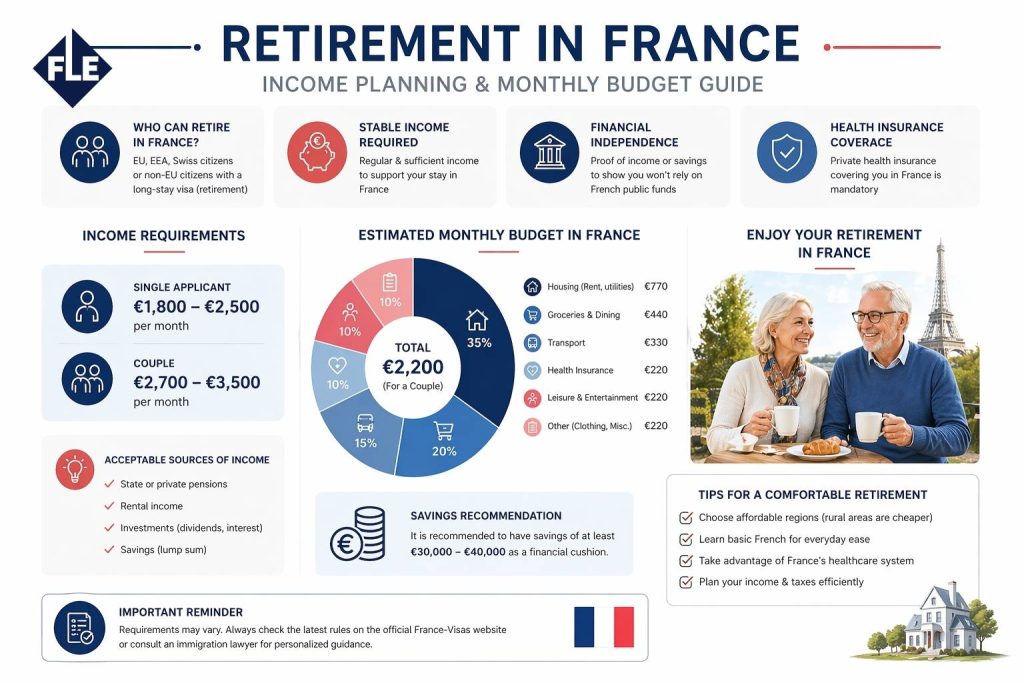
For many applicants, the most important question is the france retirement visa income requirement. French authorities generally want to see that retirees can live in France without working locally or relying on public support. There is no single “retirement” threshold published for every case, but consulates commonly assess whether your resources appear stable, regular, and sufficient for the intended stay.
In practice, financial expectations are often measured against the French minimum wage benchmark (SMIC), which is frequently used as a reference point for visitor residence applications. As of 2026, this is commonly cited at approximately €1,800 gross per month for one adult, although decisions remain case-specific and may vary by location, household size, and overall file quality.
Estimated Financial Benchmarks for Retirees in 2026
| Household Type | Suggested Monthly Resources* | Stronger Position Often Seen |
|---|---|---|
| Single Applicant | €1,800+ | €2,200+ |
| Couple | €2,700+ | €3,200+ |
| Couple with Dependants | Case Specific | Higher evidence required |
*Indicative planning figures only. Final decisions depend on the consulate and personal circumstances.
When considering the income needed to retire in france, authorities usually look at the full picture rather than one number alone. A pension statement, Social Security income, rental income, investment dividends, or accessible savings can all support an application where properly evidenced. Clear bank statements and a consistent income history often carry more weight than a recent lump-sum transfer.
Applicants asking how to retire in france should also remember that lower-cost regions may be viewed differently from major cities such as Paris or the Côte d’Azur, where living expenses are higher. Strong accommodation evidence can therefore support the overall file.
Meeting the france retirement visa requirements is not only about amount, but credibility, traceability, and long-term sustainability. At French Legal Experts, we help clients present pensions, savings, and cross-border income in a clear and professionally structured way to strengthen a retirement visa france application.
Health Insurance Rules
Health cover is one of the most important parts of any retirement visa france application. Many applicants focus on income and documents first, but insurance can be equally decisive. Whether you are applying under a france retirement visa route or planning how to retire in france, French authorities generally expect proof that you can meet medical costs during your stay without relying on public funds.
For most non-EU applicants, the usual requirement is private medical insurance that remains valid for the full visa period. Current guidance and industry compliance sources regularly note that policies should clearly cover medical treatment, hospitalisation, and repatriation, with documentation suitable for visa review. Limited travel-only policies are often considered weaker for long stays.
Typical Insurance Expectations for Retirees
| Requirement | Why It Matters |
|---|---|
| Full policy validity for intended stay | Avoids gaps in coverage |
| Medical treatment cover | Routine and urgent care |
| Hospitalisation cover | In-patient treatment costs |
| Repatriation cover | Emergency return if required |
| Clear certificate in English or French | Easier consular review |
These points are especially relevant to health insurance france retirement visa planning, where the strength of the policy can influence the overall credibility of the application.
Applicants researching retire in france insurance should also understand the transition after arrival. Some residents may later qualify for French healthcare systems depending on residence status and circumstances, but this is not automatic for every retiree on day one. Many new arrivals therefore keep private cover in place until local eligibility is confirmed. Independent guidance often notes a three-month period before some residents can register for state coverage.
For americans retiring in france, this point is particularly important because many domestic US health plans provide limited overseas coverage. Private international insurance is often the safer route when building a visa file.
Meeting france retirement visa requirements is not only about having insurance, but having the right insurance evidenced correctly. At French Legal Experts, we help retirees review policy wording, align documents with visa standards, and present stronger applications with fewer avoidable delays.
Strong health cover can make the entire france visa for retirees process smoother, more credible, and more secure.
How Americans Can Retire in France

Interest in americans retiring in france continues to grow, particularly among retirees seeking lifestyle benefits, healthcare access, and long-term residence in Europe. The good news is that can americans retire in france is usually a practical question with a positive answer, provided the applicant meets the legal and financial conditions. There is no separate retirement category, but many U.S. nationals use the same residence route commonly described online as a retirement visa france or france retirement visa pathway.
For those asking can an american retire in france, the key requirements are usually stable resources, private health insurance, accommodation in France, and a clear intention not to work locally. U.S. retirees often rely on Social Security income, private pensions, IRA or 401(k) withdrawals, investment income, or accessible savings. Strong documentation is essential, particularly where income comes from multiple sources.
Common Financial Evidence for U.S. Retirees
| Source of Funds | Commonly Used in Applications |
|---|---|
| Social Security | Yes |
| Employer Pension | Yes |
| IRA / 401(k) Withdrawals | Yes, with statements |
| Investment Income | Yes |
| Savings | Often supportive evidence |
Applicants planning to retire in france from usa or retire to france from usa should also prepare for practical matters beyond the visa itself, including tax residence, banking, healthcare cover, estate planning, and document legalisation. These areas are often overlooked during early planning but can delay relocation if addressed too late.
Many people researching retiring to france from usa want to know how to retire in france as an american without unnecessary complications. In most cases, the process starts with a long-stay visa application through the French consular system in the United States, followed by compliance steps after arrival in France.
Those seeking to retire in france as a us citizen should pay close attention to consistency across the application file. Income evidence, accommodation dates, insurance coverage, and passport validity should all align. Even where applicants meet the financial threshold, poorly presented files can create avoidable delays.
U.S. Applicant Planning Checklist
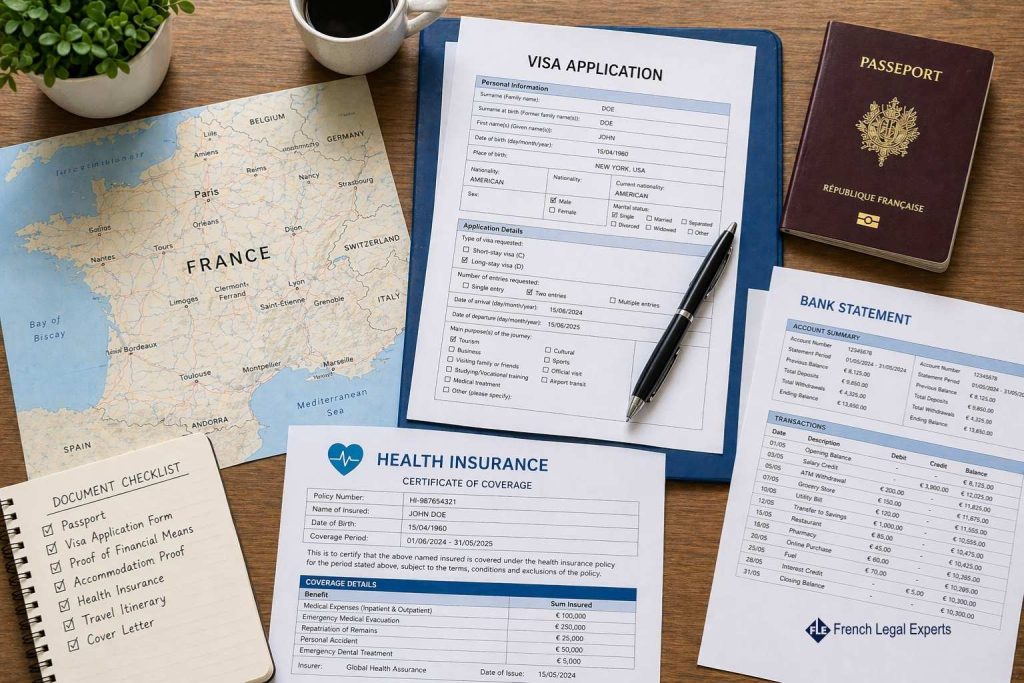
| Area | Why It Matters |
|---|---|
| Income Proof | Supports france retirement visa requirements |
| Health Insurance | Required before relocation |
| Accommodation | Needed for visa file |
| Tax Planning | Important for U.S. citizens abroad |
| Timelines | Consular appointments can vary |
Searches for retirement visa france for us citizens and france retirement visa for us citizens often reflect a desire for one clear route. In reality, each case depends on finances, marital status, family dependants, and long-term goals. Some applicants plan seasonal residence, while others want a permanent move and later residence renewals.
At French Legal Experts, we regularly assist U.S. clients who want clarity on how to retire in france, meet france retirement visa requirements, and build a stronger application strategy from the outset. For many Americans, relocating successfully is less about finding a special visa name and more about choosing the correct legal route, preparing persuasive evidence, and avoiding preventable mistakes.
How UK Citizens Can Retire in France
Interest in retire in france from uk remains strong, but the legal route changed significantly after Brexit. UK nationals who move to France now generally follow the same immigration framework as other non-EU applicants, unless they already held protected residence rights under the Withdrawal Agreement. This means new applicants usually need a long-stay residence route before relocating for retirement.
Many people search for a france retirement visa uk citizens option. In practice, there is no separate visa issued under that exact name. Instead, British retirees commonly use the same pathway often described online as a retirement visa france or france retirement visa route for financially independent residents. The main requirements usually include sufficient income, accommodation in France, health insurance, and a clear intention not to work locally.
For those asking how to retire in france from uk, pension income is often central to the application. State pension payments, private pensions, investments, rental income, and savings may all help support a file where properly documented. Consulates and authorities typically look for stability, credibility, and enough resources to live in France without relying on public assistance.
Healthcare planning is equally important. Some UK retirees may qualify for the S1 route depending on their personal circumstances, which can help with access to healthcare in France. Others may need private medical insurance at the start of the process. Choosing the right approach early can prevent delays.
Anyone planning retiring to france from uk should also think beyond the visa itself. Tax residence, property ownership, inheritance planning, banking arrangements, and renewal timelines all deserve attention before the move takes place.
Although this section focuses on British applicants, the same strategic principles often apply to americans retiring in france and other non-EU nationals researching how to retire in france. Strong documentation and realistic preparation remain the foundation of successful applications.
At French Legal Experts, we assist UK citizens with post-Brexit relocation planning, document preparation, and practical guidance on meeting france retirement visa requirements. With the right legal route and careful preparation, retirement in France can remain an achievable goal.
How to Apply Step by Step
Understanding the process is essential for anyone researching how to retire in france. While many people search for a special retirement route, the practical path is usually the same residence framework discussed throughout this guide under the retirement visa france or france retirement visa concept. Success often depends less on the label and more on preparing a complete, credible application file from the beginning.
1. Prepare Your Documents
The first step in how to retire to france is gathering the correct supporting evidence. Most applicants should expect to provide a valid passport, proof of accommodation, financial documents, health insurance, photographs, and completed forms. Official France-Visas guidance confirms that long-stay applicants must provide supporting documents linked to their reason for stay.
For many retirees, this is where france retirement visa requirements are won or lost. Missing bank statements, weak income evidence, or inconsistent dates can delay approval.
2. Submit the Online Application
Those asking how to get a retirement visa in france usually begin through the official France-Visas website, where applicants can review procedures and start the process. although many applicants first seek guidance from a French visa lawyer to prepare their case properly.
Applicants first check their situation, complete the online application, and review the document checklist generated for their nationality and stay purpose. France-Visas describes this as the standard route for obtaining a visa.
3. Attend the Visa Appointment
After filing online, applicants are normally directed to a visa centre or consular appointment for document submission and biometrics. Depending on nationality and location, external service providers may manage appointments. Bring originals, copies, and organised evidence.
This stage is particularly important for americans retiring in france, as U.S. applicants often need to coordinate timelines across multiple documents such as pensions, insurance, and housing.
4. Enter France and Complete Post-Arrival Steps
Once approved, you may travel to France within the visa validity dates. Official long-stay visa guidance notes that certain visa holders must validate their status online within three months of arrival.
Applicants often focus only on visa approval, but post-arrival compliance is equally important.
5. Renew Before Expiry
Anyone serious about how to retire in france long term should plan renewals early. Depending on the visa type issued, future residence formalities may involve local prefecture or digital renewal procedures. Updated income, housing, and insurance evidence may be required again.
At French Legal Experts, we assist clients with every stage of the move—from first strategy review to submission, post-arrival compliance, and renewals. A carefully prepared retirement visa france application is usually faster, clearer, and far less stressful than trying to correct mistakes later.
Common Reasons Applications Get Refused
Many applicants assume that meeting the basic france retirement visa requirements guarantees approval. In practice, decisions often depend on the overall credibility, consistency, and quality of the file submitted. A well-qualified retiree can still face refusal if documents are incomplete, unclear, or poorly organised. This is why careful preparation matters for any retirement visa france application.
One of the most common refusal reasons is insufficient or weak financial evidence. Authorities usually want to see stable resources that can support life in France without local employment. Pension statements, investment income, rental income, and savings can all help, but unexplained recent deposits or irregular bank activity may raise concerns. Official France-Visas guidance regularly refers to the need for supporting documents adapted to the purpose of stay.
Another frequent issue is incomplete paperwork. Missing translations, expired passports, inconsistent forms, unsigned declarations, or outdated insurance certificates can slow a case or lead to rejection. Applicants researching how to retire in france often underestimate how closely documents are reviewed.
Accommodation evidence is equally important. If lease dates do not match travel plans, ownership papers are unclear, or host documents are missing, the file may appear unreliable. This affects many people applying for a visa to retire in france, especially where housing plans are still uncertain at the time of submission.
Health insurance problems are also common. Policies with limited duration, unclear coverage, or missing certificates may weaken the application. Insurance should match the intended stay and be easy for the reviewing authority to understand.
Most Common Refusal Triggers
| Issue | Why It Causes Problems |
|---|---|
| Weak income evidence | Doubts about self-sufficiency |
| Missing documents | File considered incomplete |
| Unclear accommodation | Questions about genuine residence plans |
| Poor insurance cover | Inadequate health protection |
| Inconsistent information | Credibility concerns |
Many americans retiring in france and other non-EU applicants are financially eligible but still delayed because the application file does not present the evidence clearly. The same applies to anyone comparing a france retirement visa route without understanding document standards.
At French Legal Experts, we help clients strengthen applications before submission by reviewing finances, housing evidence, insurance, and overall strategy. For most retirees, success is not only about eligibility—it is about presenting a professional, coherent case from the outset.
Frequently Asked Questions About Retirement Visa France
Does France have a retirement visa?
France does not issue a standalone visa officially called a retirement visa. Most retirees use a long-stay residence route for financially independent applicants. This is why many people searching for a retirement visa France option are actually looking for the correct residency pathway.
Can Americans retire in France?
Yes, in many cases Americans can retire in France if they meet the financial, accommodation, health insurance, and immigration requirements. Many U.S. applicants use the same route commonly described online as a France retirement visa process.
How much income to retire in France?
There is no single fixed amount for every applicant. Authorities usually assess whether income is stable and sufficient for living costs in France. Pension income, investments, rental income, and savings may all be considered.
Can I use savings instead of pension?
Savings can often support an application, especially where funds are accessible and clearly documented. However, regular recurring income such as pensions may sometimes be viewed more favourably than savings alone.
How long can retirees stay in France?
This depends on the visa or residence status granted. Long-stay routes may allow residence beyond the standard 90-day Schengen visitor limit, subject to approval and compliance.
What is the best visa to retire in France?
For many non-EU nationals, the most suitable route is often the long-stay visitor residence pathway for financially independent applicants who do not intend to work in France.
How to retire in France as an American?
The usual process involves preparing financial evidence, arranging accommodation, obtaining health insurance, filing the visa application, and completing post-arrival steps once in France.
What are France retirement visa requirements?
Common France retirement visa requirements include a valid passport, proof of sufficient resources, accommodation in France, health insurance, and a complete supporting file.
Can couples apply together for a retirement visa France route?
Yes, couples often apply together, but each case depends on nationality, finances, accommodation, and family circumstances. Combined income may be relevant in some cases.
Can I buy property in France and retire there?
Buying property can help with accommodation evidence, but ownership alone does not automatically grant residency rights or a visa.
How long does a France retirement visa application take?
Processing times vary by country, season, consular workload, and the completeness of the file. Early preparation is strongly recommended.
Can my retirement visa France application be refused?
Yes. Common reasons include weak financial evidence, incomplete paperwork, unclear housing arrangements, or inadequate insurance.
Can French Legal Experts help with retirement applications?
Yes. French Legal Experts assists clients with eligibility reviews, document strategy, application preparation, and long-term relocation planning for France.
Final Thoughts on Retiring in France
For many applicants, a move to France is entirely achievable with the right planning. Although there is no standalone retirement visa France category, suitable legal pathways exist for financially independent retirees who meet the relevant requirements.
Understanding income expectations, health insurance, accommodation evidence, and application timing can make the France retirement visa process smoother and reduce avoidable delays. This is especially important for Americans retiring in France and other non-EU nationals preparing a long-term relocation.
If you are considering how to retire in France and would like tailored guidance, French Legal Experts can assist with strategy, documentation, and residency planning.
Speak With Our Team